freshly ground
horseradish root
Sure, you can buy prepared horseradish in a jar, but make this once and you won’t want to use the supermarket stuff again.
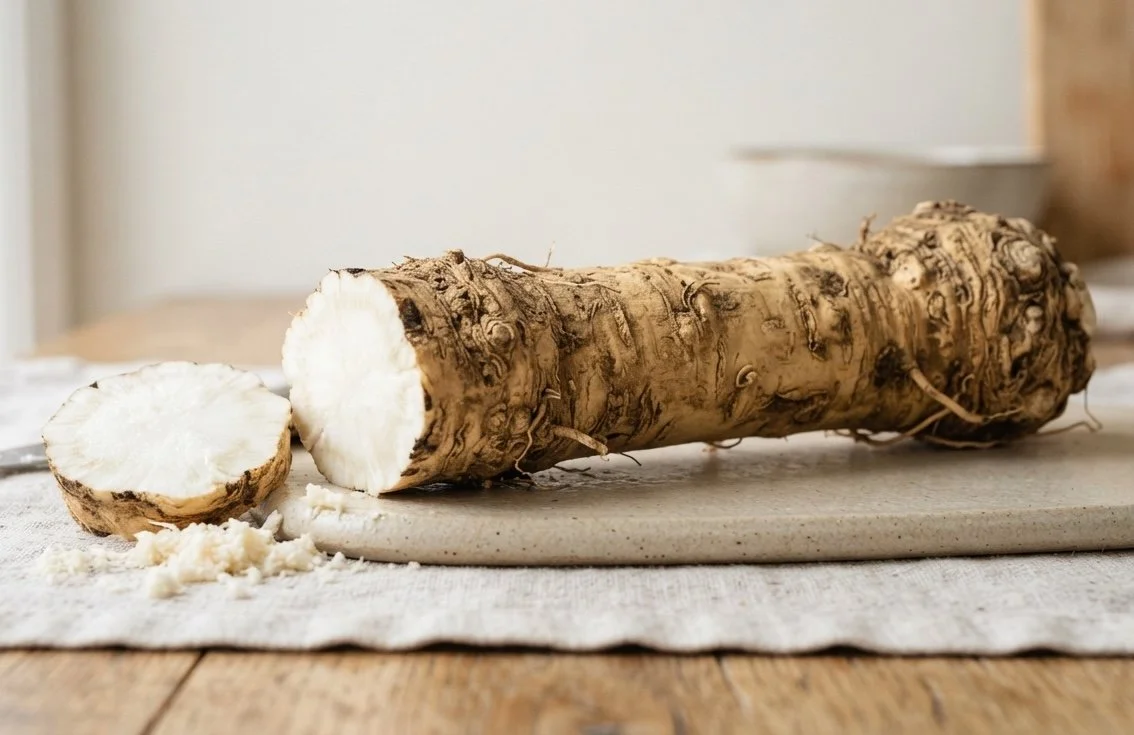
You kinda have to feel sorry for the horseradish root. Vegetables are one of the ways that nature expresses herself through art. Think of a perfect bunch of carrots with their long bright green fronds, or an artichoke, or a shiny eggplant. I could go on for a while, but you get the picture. These ugly, gnarly, hairy things are anything but beautiful. And the taste—you have to wonder why, when the first humans pulled one out of the ground and took a bite, they didn’t drop it and run, recording through cave drawings that this is inedible, and never going back for a second try.
And the fumes! Does cutting onions make your eyes sting? You ain’t seen nothing yet! The fumes from a bowl of freshly grated horseradish root can send the cats flying from the kitchen to hide under the bed. They can make you feel like your head is going to explode.
But while I wouldn’t want to slice one up and serve it as a side dish, when chopped with vinegar, salt, and a touch of sugar it makes for an extraordinary condiment. It’s a great counterpoint for a rich steak. A bloody mary would be lackluster without it. And gefilte fish . . . I don’t even want to imagine gefilte fish without horseradish.
Although horseradish is used by non-Jews world wide, it has an important place in Judaism, especially at Passover time.
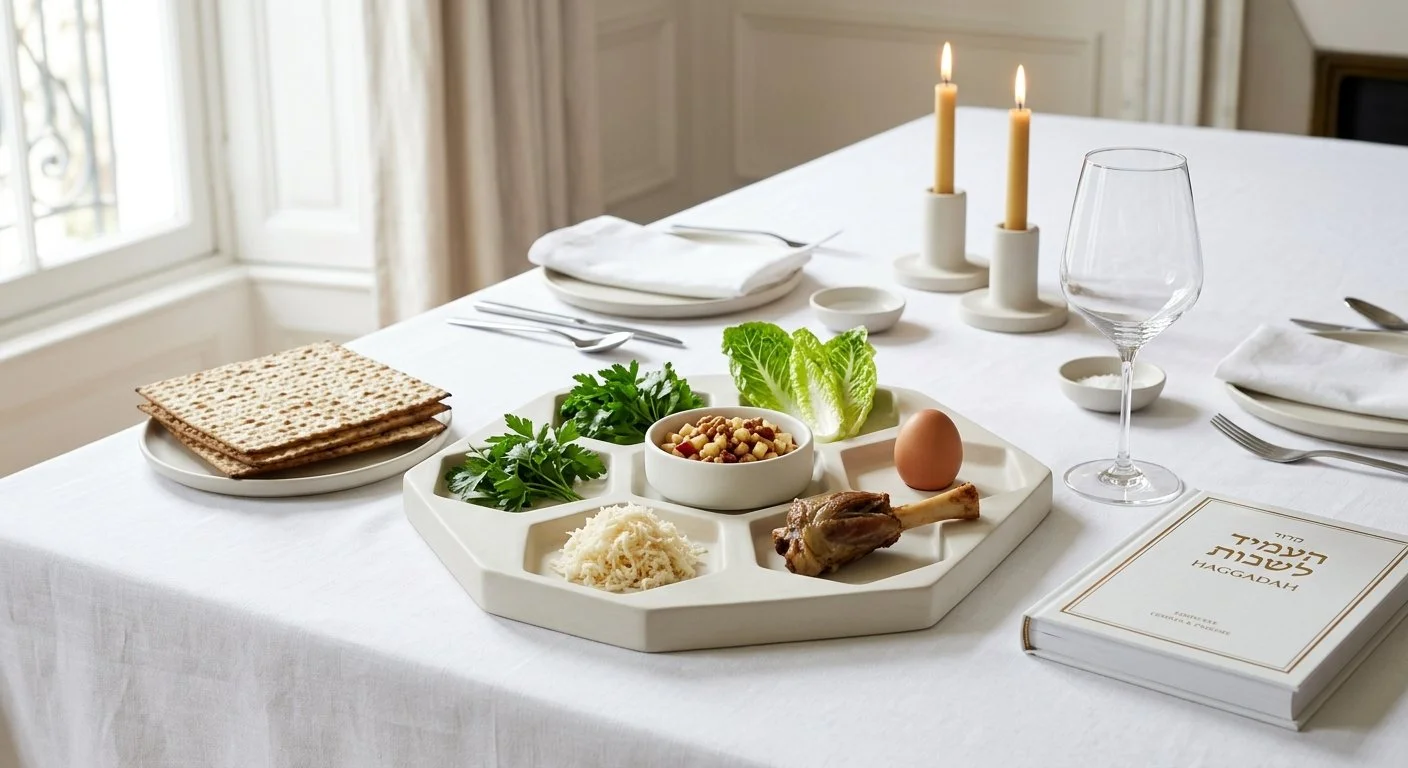
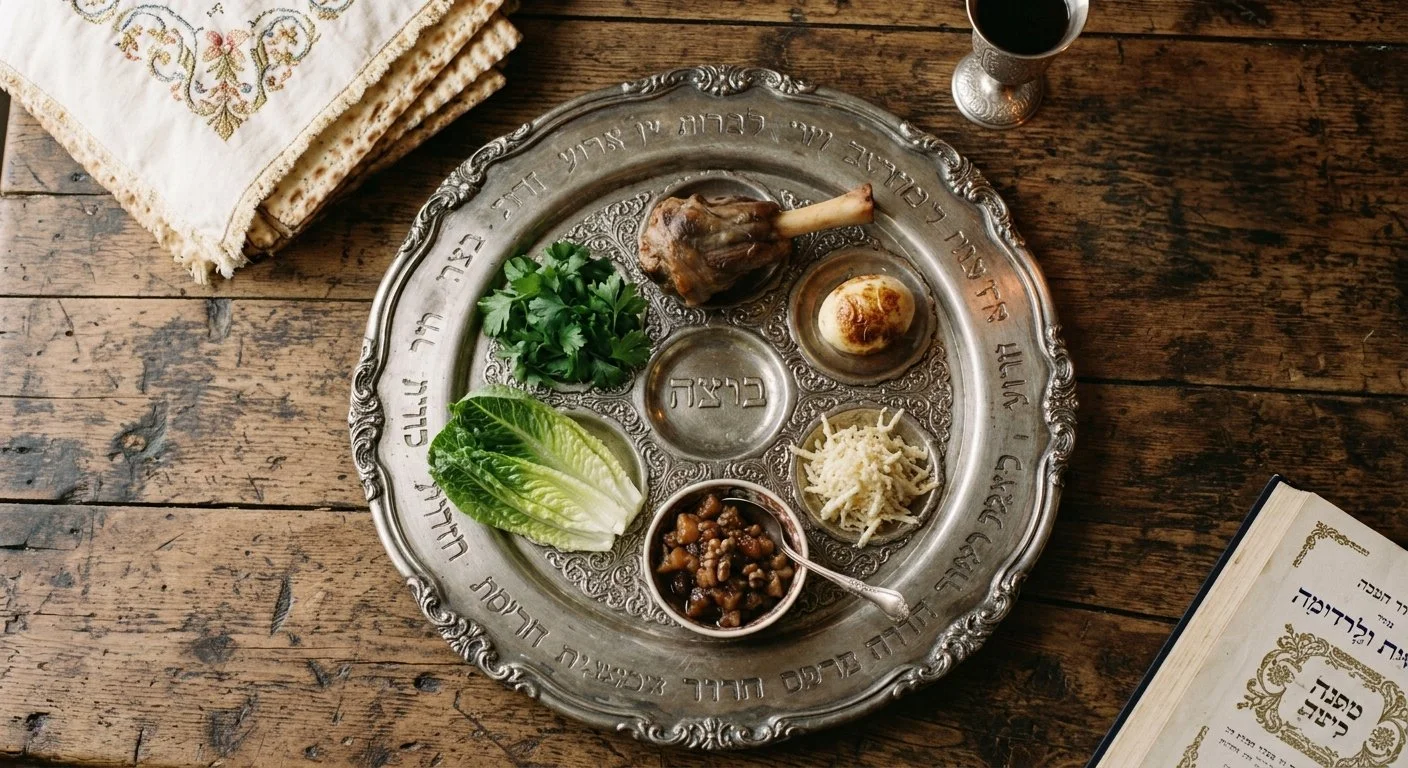
My family always used horseradish on the Seder plate* as the bitter herb. My rabbi said that his family did the same. While this is very common—to the point that many Seder plates have the word חֲזֶרֶת, chazeret inscribed upon them. But . . . my rabbi told me that this is wrong. The bitter herb is supposed to be a leafy green, like romaine or chicory, like mustard greens or dandelion or arugula. So now I place one of those on the Seder plate. But, like many other people who now use a leafy green, they still put some horseradish on the ceremonial plate, out of family tradition. I couldn’t imagine a Seder plate without horseradish.
*The Seder is the telling of the story of the Exodus at Passover, part of the long ritual before the actual meal. The Seder plate is ceremonial, it has places for all the symbolic foods of the holiday and it remains on the table throughout the meal.
So how did the horseradish become the bitter herb for Ashkenazim? Think of the climate in early spring in Russia. Often there was still snow on the ground when Passover rolled around. There were no leafy greens to be had. After a while, it became their custom to use horseradish and they continue to use it out of tradition to this day, even though your choice of leafy greens is now available year round.
If you’re making prepared horseradish for Passover, take a few slices off an end of the root to display on the Seder plate before grating the rest. Aesthetically, I prefer the slices on the Seder plate.
My grandmothers used a box grater to grate the horseradish. If you want to go that route, go for it. If you have a food processor, I strongly suggest using it.
I recommend wearing a gas mask. Or one of those paper ones. And/or open the windows. Be prepared to run from the room now and then, to catch your breath.
Homemade Prepared horseradish
When shopping for horseradish, choose roots that are firm and not wrinkled. The interior should be pure white when it’s fresh.
Note: There are no amounts listed in the ingredients list. After grinding your horseradish you’ll measure how much you’ve got and adjust the amount of the other ingredients as needed.
Ingredients:
fresh horseradish root (I usually buy two large roots)
salt
white sugar
white vinegar
freshly squeezed lemon juice
water
Method:
Because they are so often oddly shaped, I find it easier to cut the roots into manageable pieces before peeling them with a vegetable peeler.
Cut the peeled root into smallish pieces, rinse off any dirt, and place them in a food processor. Process until medium fine, then load it all into a big measuring cup to see how much you have.
You can adjust the intensity. For milder horseradish add the vinegar and other ingredients immediately. If you want it to be killer strong, leave the grated horseradish out for a bit before proceeding.
For each loosely packed cup, add ¼ cup white vinegar, 1 teaspoons salt, 1 tablespoon water, 1/4 teaspoon freshly squeezed lemon juice, and 1 tablespoon sugar (or to taste). Return it to the food processor and pulse until very fine.
Store the prepared horseradish in the fridge, in a tightly sealed jar. It will keep for about a month.
Option: Take half of the prepared horseradish and add a little beet juice to it—you can use the liquid from canned beets—for additional flavor and a lovely color. At the table, you can serve both the white and the red.
Did you make it? Was it fabulous?