
Classic
osso bucco
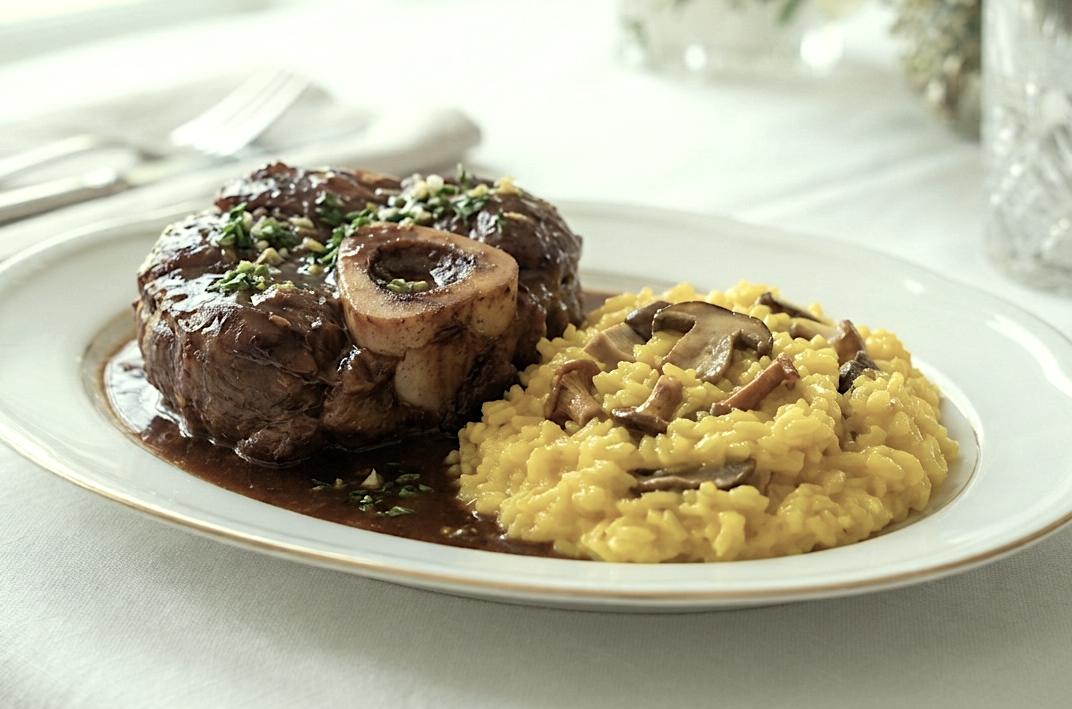
Classic Osso Bucco
What’s the deal with veal? It used to share equal space, both in cookbooks and in the meat case at the supermarket, with beef, lamb, pork, and chicken. Nowadays, if you’re looking for veal in the United States, you’ll have to find a specialty butcher.
Why? Ethics. When the public became aware of the horrific practices of raising veal, people turned away en masse.
But all veal is not created equal. What’s known as “rose veal,” so named for its pink color, is not raised in isolated crates, underfed and unable to stand or move for the duration of their short, tortured lives. The calves that are raised as rose veal roam freely in the pasture, with the ability to socialize, forage, and nurse. They’re typically slaughtered between 6 and 9 months of age.
We can discuss whether eating “baby animals,” which would include lamb—although chickens and pigs are generally slaughtered at a young age as well—is ethical. We can discuss whether eating meat of any kind is ethical. I’m not here to make that decision for you; that’s why I usually give you a choice between a vegetarian or meat menu each week. I only wish to point out the real deal about having veal for a meal—it’s all about sourcing. There are several online kosher meat sources that sell ethically raised rose veal. After the sourcing, it’s all about saucing.
I was in my twenties when I was first served osso bucco at the home of my (former) sister in law—her husband was from Milan and she was quite adept at Northern Italian cooking. It was also the first time I had risotto. I was absolutely gushing, as they showed me how to scoop out the marrow and slather it onto thick slices of Italian bread. I swore it was the best meal I’d ever eaten. Funny, she served a Jewish dessert—Rugelach. She said “I get these from the bakery. I love them but I have no idea of what they’re called.
When we left, she’d learned the word rugelach, and I was gripping her recipes for Osso Bucco and Risotto Milanaise, tightly in my hand.
I’ve since made it many times, for holidays and other important celebrations. This is Marina’s recipe:
Osso Bucco
serves 6
Ingredients:
Note: You’ll need some butcher’s twine to keep the meat from falling off the bones when it’s cooking
For the meat
3 whole veal shanks, cut into 3 inch thick portions. You don’t want them any thinner. Have the butcher cut them for you. It’s not a job easily done with a knife.
flour for dredging the meat
½ cup good, fruity Italian olive oil
1 medium onion, cut mirepoix (diced, the pieces about the size of peas)
2 medium carrots, cut mirepoix
1 stalk celery, cut mirepoix
2 cloves garlic, minced
¾ cup dry white wine, such as Pinot Grigio (a little more, if needed)
1 to 2 cups stock, chicken or veal
1 bay leaf
2½ cups canned tomatoes (preferably San Marzano) plus their juice, chopped
1 tablespoon tomato paste
1 sprig rosemary
2 sprigs thyme
kosher salt and pepper to taste
For the gremolata
I use a microplane to grate the garlic and lemon rind finely
4 tablespoons parsley, finely chopped
2 cloves garlic, grated
2 tablespoons lemon peel, grated
Method:
Combine the ingredients for the gremolata in a small bowl and mix it all together.
Wrap a piece of butcher’s twine around the side of each shank portion and tie it tightly with a knot. This will prevent the meat from slipping off the bones while it’s braising.
Dredge each piece in flour on all sides.
Warm the oil in a Dutch oven. When the oil is hot but not smoking, add the shanks to the pot, leaving room between them. You’ll probably need to do this in batches. When the shanks have developed a golden brown crust on the bottom, turn them and brown them on the other side. Then remove them from the pot and let them rest on a platter with a lip, so that you don’t lose any juices that come off the meat.
When all the pieces have been browned and set aside, add the onion, carrot, and celery to the pot and sauté until the vegetables are soft and beginning to brown. If you need to add more oil to the pot, do so.
Add the minced garlic and sauté another minute.
Add the wine and the bay leaf and simmer it gently until the wine is evaporated. Then add the tomatoes and the tomato paste, stirring with a wooden spoon until everything is well combined. Add the thyme and the rosemary.
Gently add all the shank pieces and any accumulated juices back to the pot. Add stock to come to a little more than half the way up the sides of the shanks.
Cover the pot and turn the heat down low. Cook at a slow simmer for 1½ hours, or until tender. Check the pot every now and then to make sure the pot isn’t getting dry. Add more stock if necessary.
Remove the shanks from the pot. Purée the sauce with an immersion blender or in a food processor, then stir in half the gremolata. Taste for salt and pepper
Return the shanks to the pot and cook, covered, for another 5 minutes.
Arrange the shanks on a serving platter and garnish with the remaining gremolata.
Serve the Osso Bucco with Risotto ala Milanaise.
Set a loaf of thickly sliced Italian bread and a dish of good olive oil seasoned with salt, pepper, and a bit of chopped herbs on the table. Diners brush a bit of the oil on piece of bread and spoon on some of the marrow that you’ve taken from the bones.
Did you make it? Was it fabulous?