
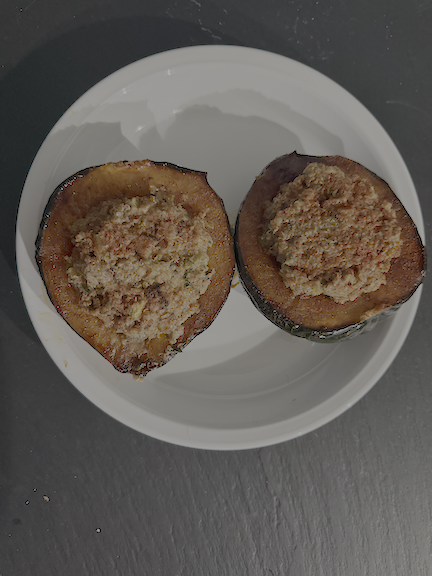
Pre-Roasted Quinoa-Stuffed Acorn Squash
Unfortunately, we ate the beautiful roasted ones before I remembered to take a photo….
Twice Roasted
acorn Squash
with Quinoa Pilaf
A Show-stopping vegetarian entrée worthy of your seder table
Cruise the internet for a pesadik vegetarian entrée and you’ll find that the pickings are slim. There are a plethora of vegetarian recipes for Passover, but few of them strike me as a Seder entrée. They sound more like side dishes to me.
Necessity is the mother of invention.
If you need a vegetarian entrée for your Seder, you’ve found it!
(And don’t be surprised if the meat-eaters want to try some of this as well!)
The Twisted Challah is getting ready to put away the challah. Passover is only two weeks away, and here at Black Cat Cottage, preparations are in full swing. The “to do” list waves like a flag before my eyes. Prepare the house, prepare the menu…. And that presents the issue that I confront every year.
My family’s menu has been the same for 100 years. Gefilte fish. Chicken soup with matzo balls. Brisket. Chicken. A few kugels. Sweet Carrots. Asparagus. And that’s, of course, after all the stuff for the Seder plate. The concept of vegetarians at the Seder was so far off my grandparents’ radar that it was in another galaxy.
It’s tricky now. Half the people at my table want that traditional menu. The other half are vegetarians.
And so, I’ve figured out how to make vegetarian “chicken” soup. My sides are pretty much vegetarian anyway—I can swap out olive oil for the schmaltz. I’ve never found a vegetarian “gefilte fish” recipe —and I’ve tried many—that I think is worth the trouble to make, so I have vegetarian things to serve at the same time when I serve the fish. Roasted and Glazed Beets with Pistachio Pesto are perfect here.
But then there’s the entrée. Sure. There would be plenty of food for the vegetarians without making a special center-of-the-plate dish. They wouldn’t leave hungry. But I think that would make them feel like second class citizens, expected to fend for themselves, searching among the many dishes for those that don’t contain meat. I think there should be something special for them, next to the meat offerings. But what?
In the past, I’ve filled that slot with Eggplant Bourguignon. It was a definite hit, and I highly recommend the dish, whether or not it’s Passover. But I wanted something different this year, just to keep things fresh and interesting.
So I came up with this one. Not only am I serving it to my friends and family at my Seder, it’s also going to be the vegetarian option at my synagogue’s Second Night Seder. And like that eggplant dish, it would be delicious any time. In fact, it would also be an excellent choice for Thanksgiving…or Sukkot (Jewish Thanksgiving).
Whether you’re preparing a fully vegetarian seder, or you need a special vegetarian entrée that’s as impressive as your meat dishes, this dish will fit the bill beautifully.
What makes these Stuffed Acorn Squashes so fabulous?
They’re delicious.
They’re pesadik, meaning you can serve them as an impressive-looking vegetarian entrée for your Seder.
They’re prepped in advance, making them perfect to serve for a holiday, or any time you want to turn out a lovely meal with minimal work on the day of.
They’re vegetarian. Leave out the egg and they’re vegan.
They’re chock-full of protein.
They contain vegetables of every color, making them super nutritious.
They’re delicious.
The goal was to post a photo of the finished dish. Unfortunately, we were so excited to eat it that I forgot about the photo until we were cleaning up….
This stuffing is enough to fill approximately 4 acorn squash (depending on their size). Each whole squash serves 2. If your squash are very large, you could cut each half in half again before serving.
You can substitute any small, hard-shell winter squash, such as delicata or buttercup.
Twice Roasted Acorn Squash with Quinoa Pilaf
Prepare the squash:
Ingredients:
As many squash as you need, planning on one squash for every 2 people. Again, if they’re large, or if you’re serving them as a side-dish, you can cut each half in half again before serving.
Date syrup (or pure maple syrup or brown sugar)
Smoked paprika
Kosher salt and pepper
Method:
Preheat the oven to 400°.
Cut each squash in half, from stem to root.
Tip: If the squash is difficult to cut, stab it with a fork in one or two places and microwave it for 1 minute. It will soften just enough to make it easier to cut.
Use a melon baller or a spoon to scoop out the seeds and the hairy fibers.
Then rub the entire squash, inside and out, with good olive oil.
Sprinkle lightly with salt, pepper, and smoked paprika.
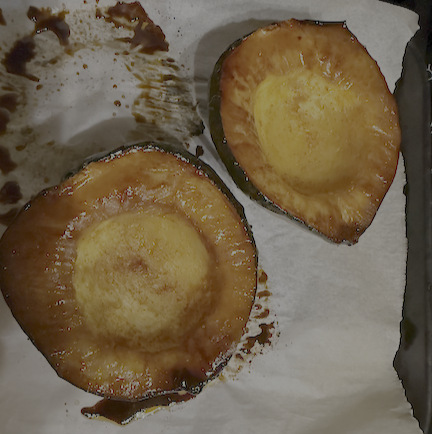
Drizzle the flesh side with date syrup (you could also use (pure) maple syrup or a light sprinkling of brown sugar) and lay the squash halves, cut-side down on a parchment-lined baking pan.
Roast for about 30—35 minutes, until the squash is just fork-tender and the surface of the cut side is somewhat caramelized. Let them rest until they’re cool enough to handle.
Meanwhile…
Cook the Quinoa
Ingredients:
1 cup quinoa—any color
A splash of good, fruity, extra-virgin olive oil
1 small/medium onion, diced small
1 ½ cups stock (chicken if not vegetaraian, chicken flavor, or vegetable)
Method:
Rinse the quinoa in a wire mesh sieve to remove any bitter saponin from the grains. (Saponin is a naturally occurring, unpleasant tasting chemical—it’s nature’s way of keeping bugs from eating the plant.)
Warm the oil in a saucepan and sauté the onion over medium/low heat. It will soften and become translucent, and then begin to brown. When it’s just golden, add the rinsed quinoa and stir for a minute or two to toast the quinoa and coat it with the fat.
Pour in the stock, stir, and bring the pot to a boil. As soon as it boils, turn down the heat to very low, cover the pot, and let it cook for 15 minutes undisturbed.
When the timer goes off remove the pot from the heat but don’t remove the cover. Let it rest, continuing to steam, for another 10 minutes.
Then remove the cover and fluff the quinoa with a fork. Set it aside.
Make the Pilaf
Don’t skimp on the salt. While you don’t want the pilaf to be “salty,” if it’s under-salted it will taste flat.
There are no exact amounts here. The vegetables should be in more or less equal amounts by volume, about half a cup each is a good guideline, more or less. Dice them all about the same size. They should be small—but just big enough so that they don’t completely disappear into the quinoa.
Ingredients:
A glug of good olive oil
1 small/medium onion
Carrots
Mushrooms (I like to use shiitake because they add a lot of flavor, but you could use white or cremini mushrooms if you prefer)
Celery
2 juicy garlic cloves
Dried figs
Pistachios (I used un-roasted ones) coarsely chopped
Dates, in a lesser amount (too much and your pilaf will be too sweet)
A handful of flat-leaf parsley, finely chopped
A small bunch of dill, finely chopped
Kosher salt and freshly ground pepper, to taste
1 egg
Optional—a parsnip, some finely chopped greens, any bit of vegetable you may have in the fridge that you’d like to use up, such as broccoli stems, a small zucchini, etc.
Optional—some crumbled feta cheese
Method:
Pour a small glug of olive oil into a skillet. Warm the oil and add the onion. Sauté until the onion is soft and translucent.
Add the carrots, celery, and mushrooms—if you’re using other raw vegetables, add them as well—and continue to sauté until the onions and mushrooms look nicely caramelized.
Then add the minced garlic and sauté for another minute.
Stir in the figs, pistachios, dates, parsley and dill.
In a bowl large enough to hold all the pilaf, mix the contents of the skillet with the cooked quinoa. If you’re using the feta cheese, add it now.
Lightly beat the egg in a small dish. When the pilaf is cool—you don’t want to make scrambled egg here—stir in the egg. Make sure everything is well combined.
Taste for salt and pepper and adjust if necessary.
Put it all together:
Heat the oven to 350°.
Set the roasted squash halves, skin side down, on a parchment-lined baking sheet.
Generously fill the hollow centers with the pilaf, making a nice mound.
Sprinkle with a little paprika for color—regular or smoked, whatever you prefer.
Roast the stuffed squash for 30 minutes.
Or…Fill the squash cups with the pilaf, wrap them in plastic wrap, and refrigerate them until ready to bake, up to 2 days in advance.