
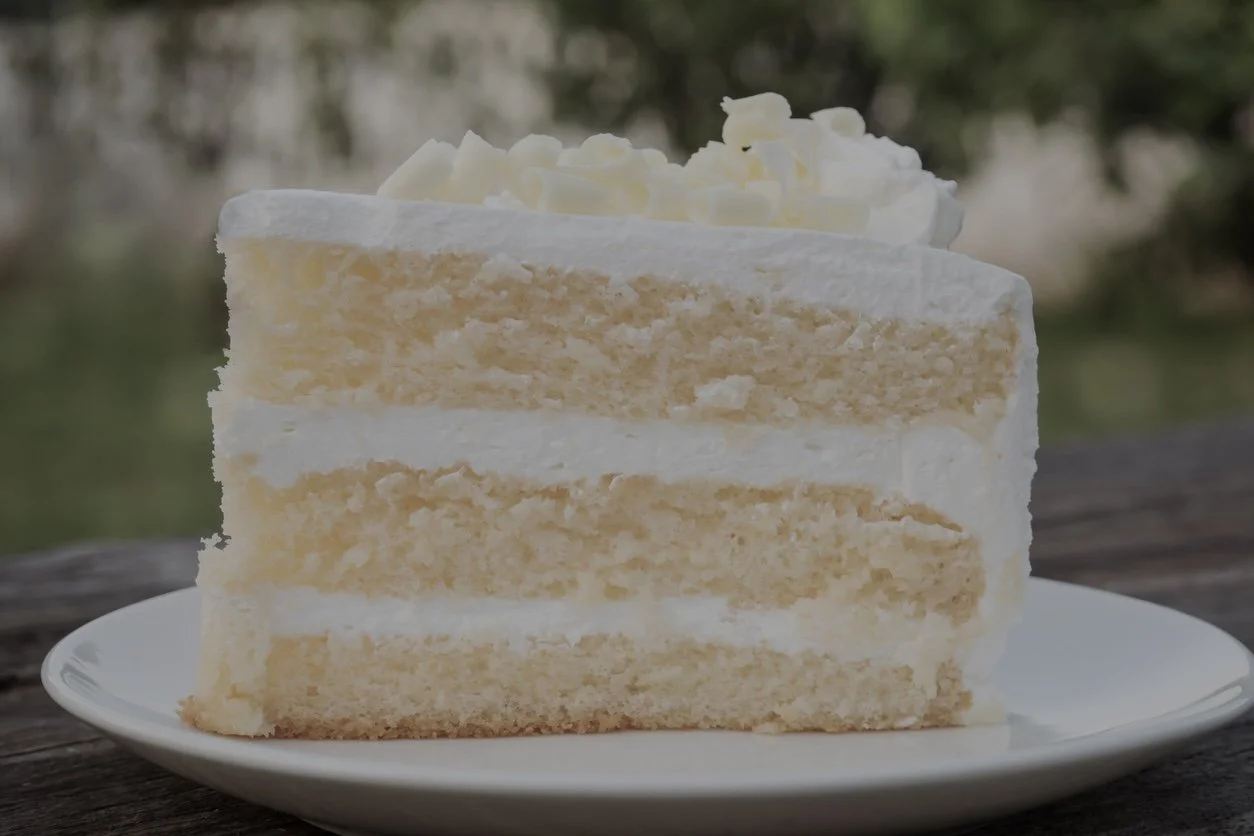
perfect white cake
This perfectly white, fluffy, and tender cake Is sturdy enough to support multiple tiers and is worthy of your most important celebrations.
perfect white cake
There are times when only a perfectly white cake will do. I’m not disparaging yellow cake here—it has its place, and I’ll give you that recipe later. But today I’m going to help you make a perfect white cake.
This recipe is perfect for wedding cakes because it’s moist, fluffy, and tender, and it’s sturdy enough to support multiple tiers and elaborate decorations.
I also use this recipe for my 4th of July American Flag Cake. The flag is red, white, and blue. Not red, yellow, and blue . . . or orange, yellow, and green. Because yellow cake plus red is orange and yellow cake plus blue is green. See what I mean?
This makes about 7½ cups of batter, which will fill two 8-inch rounds or one 6-inch and one 9-inch round.
It’s enough batter for a half-sheet cake.
While I put vanilla in almost everything, it can’t be used here because the color of the cake would be affected. There is clear vanilla available, but it’s artificially flavored and I don’t like it. Instead, I use either almond or lemon extract.
Ingredients:
1½ cups butter
2 ½ cups granulated sugar
5 eggs
1 teaspoon pure almond or lemon extract (you could also use rose water or orange blossom water)
2 cups all purpose flour
1¼ cups cake flour
¾ teaspoon baking powder
¼ teaspoon Diamond Crystal kosher salt
1 cup milk
Method:
Preheat the oven to 350°F
In a small bowl, whisk together the flour, salt, and baking powder. Set it aside.
Cream the butter and sugar in the bowl of a stand mixer, on medium/high speed, until light and fluffy. (You could also use a hand-held mixer and a large bowl.) Don’t over-mix.
On medium speed, add the eggs to the butter mixture, one at a time, making sure each egg is fully incorporated before adding the next one, scraping the bowl down with a silicone spatula as needed.
Scrape down the sides and bottom of the bowl and mix again.
Mix in your flavoring (see above)
Add the flour mixture and the milk to the wet ingredients, alternating the two, starting and ending with the flour. (⅓ of the flour, then ½ the milk, then another ⅓ of the flour, then the rest of the milk, and finally the rest of the flour)
Scrape the sides and bottom of the bowl again and give it another quick mix.
Pour the batter into greased and floured pans (see options above), and give the pans a gentle tap on the counter to settle the batter and eliminate any air bubbles.
Bake for about 35 minutes, until the middle is firm, the top is golden, and the sides pull slightly away from the pan. A toothpick should come out clean (about 160°F in the middle).
When the cakes are finished, let them sit in the pans for a couple of minutes and then turn them out onto wire racks to cool. Spray your wire racks with non stick spray so that you can easily move the cakes when they’re cooled.
Note: If you try to pick the cakes up while they’re hot, they’ll break.
Give them about 15 minutes, then invert the pans to release the cake layers. I like to turn my cakes out onto cake boards and then flip them onto the wire rack so that their top sides are up.
Fill, frost, and decorate your cake in any way you wish. Go with buttercream and/or fruit filling between the layers. You can use quick and easy American-style buttercream (confectioner’s sugar, butter, and milk), or a more complex but less sweet and more flavorful European-style buttercream (my preference). To frost the stacked layers you can use more of the same buttercream, whipped cream, or (after a thin coat of buttercream) rolled fondant.
Did you make it?
Was it fabulous?